
Overview
As part of my UNSW graduation project, I created DesignVault, a digital platform designed to help emerging designers bridge the gap between academia and industry.
Developed over 9 weeks, it combines actionable mentorship feedback, portfolio tools, and a tailored job search feature into one cohesive ecosystem, and was awarded a High Distinction for its strategic execution and design thinking.

The Problem
» Design students often graduate underprepared for the industry, lacking real-world feedback, portfolio clarity, and practical guidance.
As emerging designers enter a competitive job market, many struggle with low confidence and uncertainty, intensified by reduced collaboration and feedback during COVID-19. As a result, graduates often leave with portfolios that do not clearly communicate their design thinking or creative identity, limiting their ability to stand out.

The Solution - a glimpse
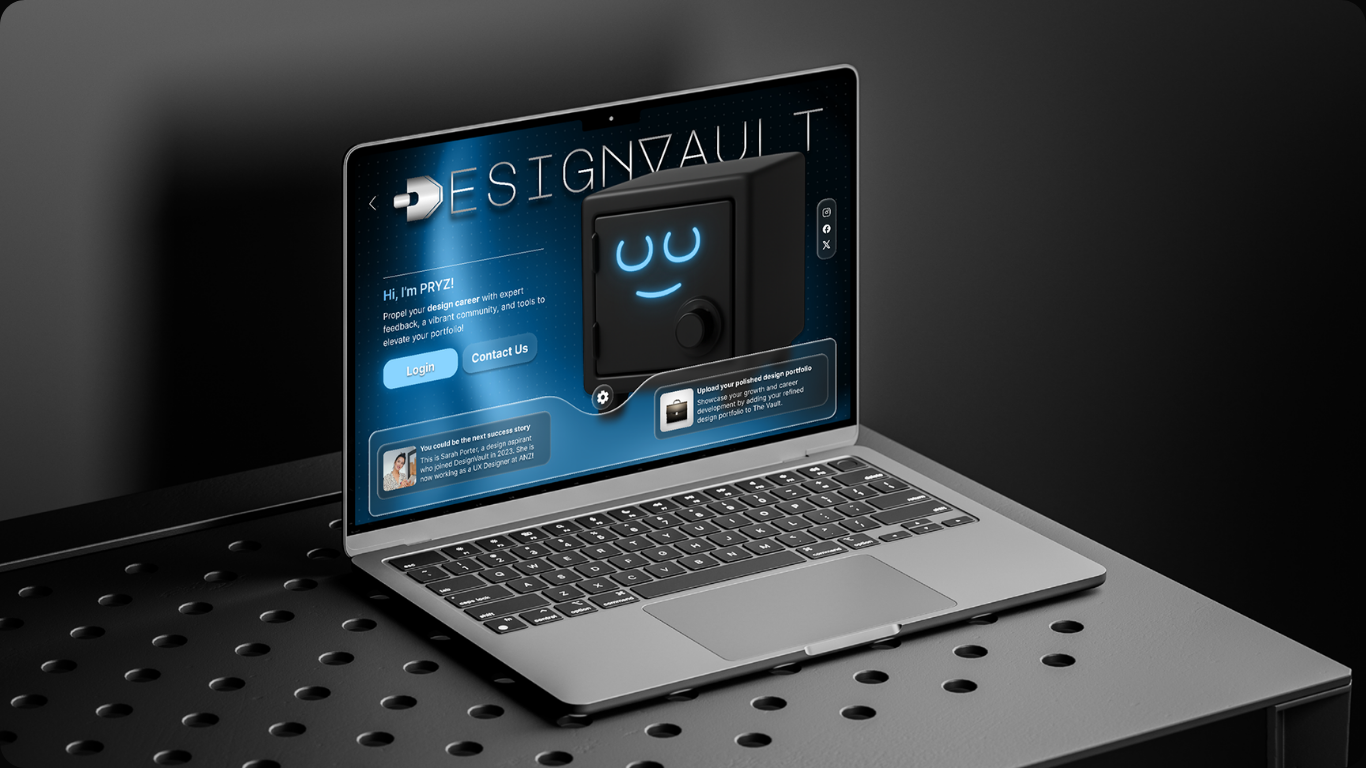
DesignVault unites mentorship, community, and career tools into one platform for emerging creatives. Through consultations, collaborative spaces, portfolio inspiration, internship tools, and AI driven feedback guided by its PRYZ persona, it transforms isolated learning into a connected path toward industry readiness.
Research
» Many students want a more approachable, reliable way to connect with tutors without the anxiety of formal outreach or lost communication.
[Market Research]
Analysing Competitors
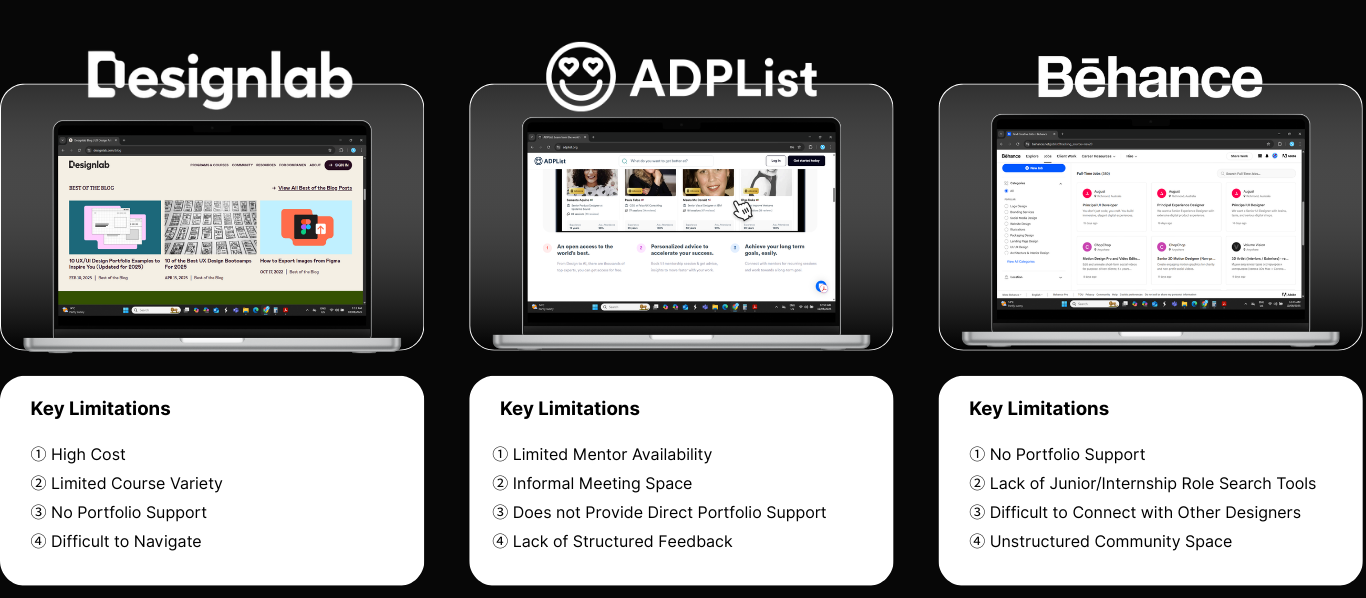
Existing platforms like Behance, Designlab, and ADPList lack integrated mentorship, actionable feedback, and long-term portfolio development support, highlighting key gaps for emerging designers.
[Affinity Mapping]
Semi-Structured Interviews - Key Quotes
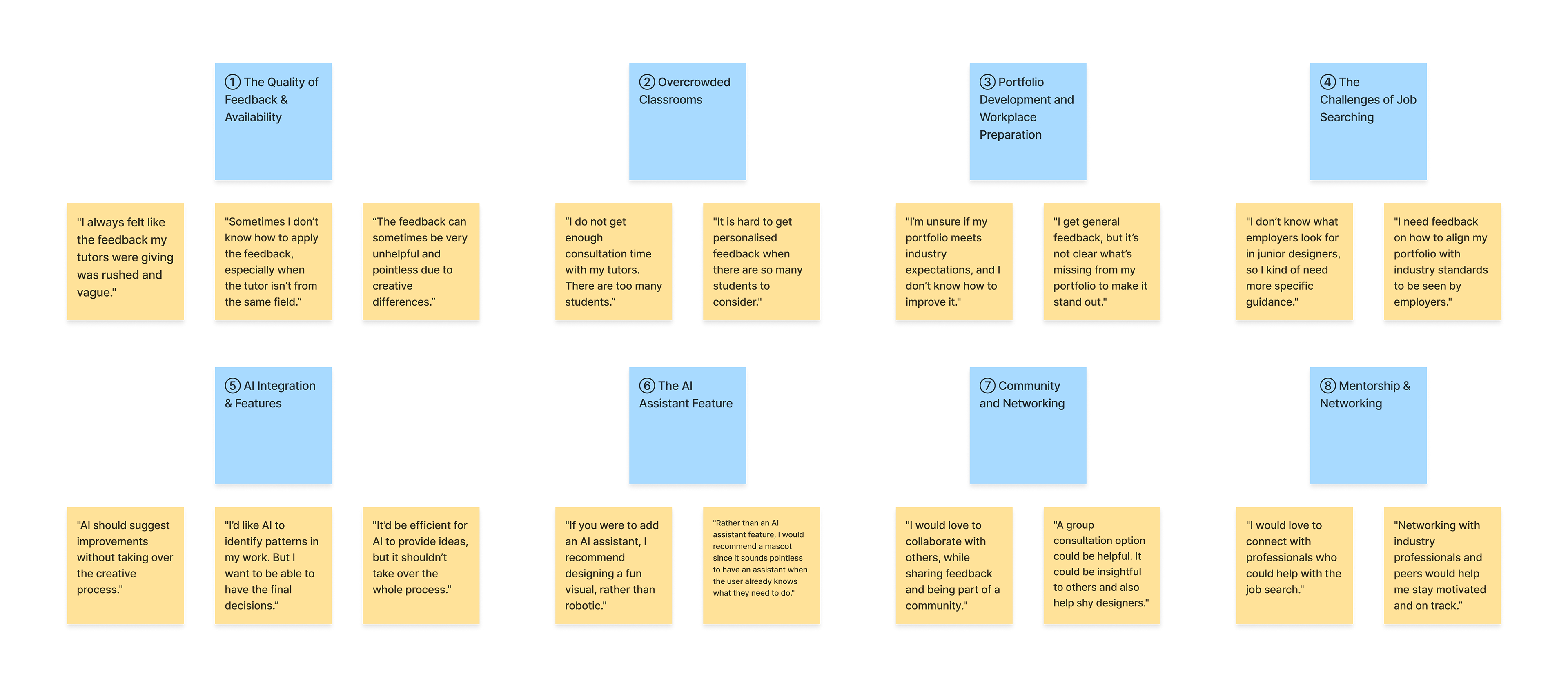
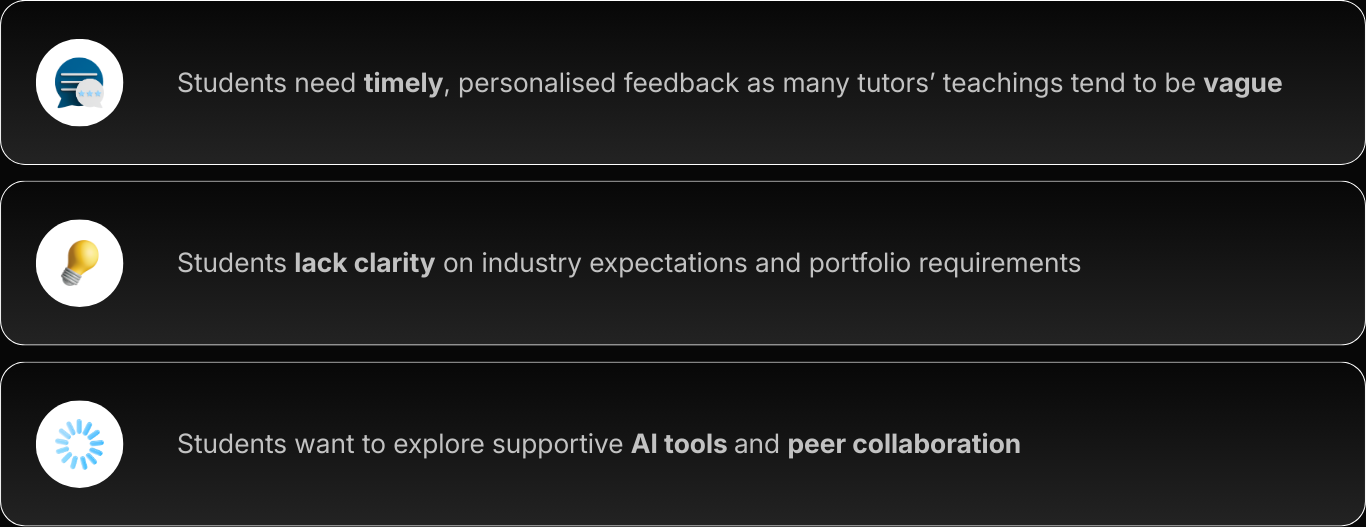
I interviewed three design students to explore their challenges, using an affinity map to reveal struggles with limited feedback, crowded environments, and uncertainty about industry standards, while valuing mentorship, community, and AI as a helpful tool.
[Affinity Mapping]
Semi-Structured Interviews - Findings
Survey Questionnaires
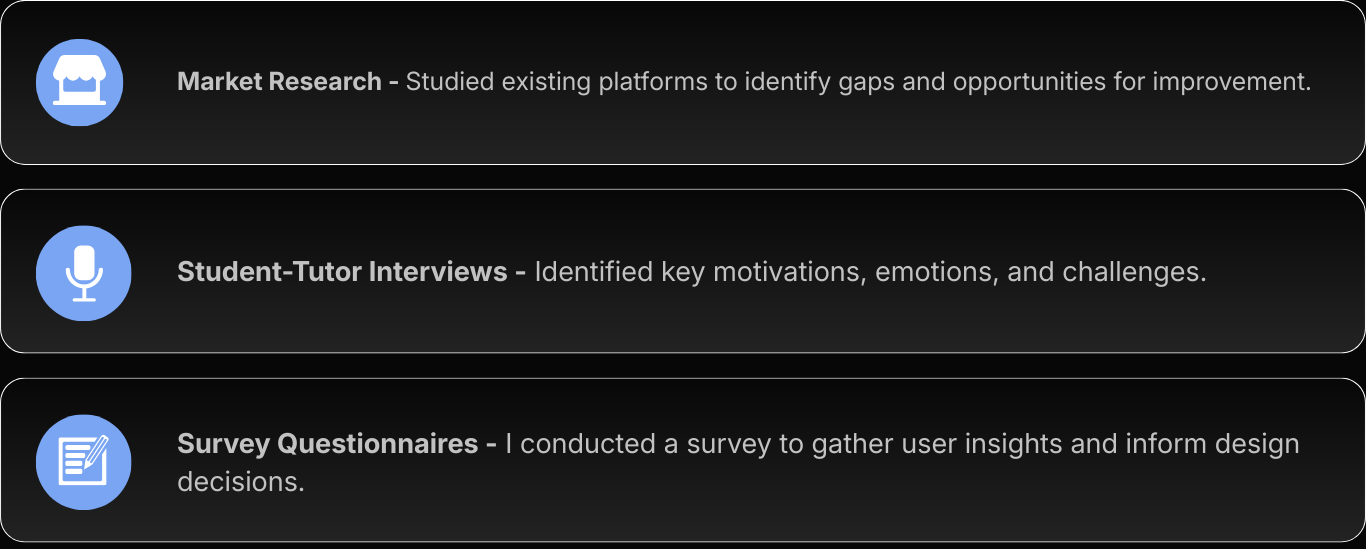
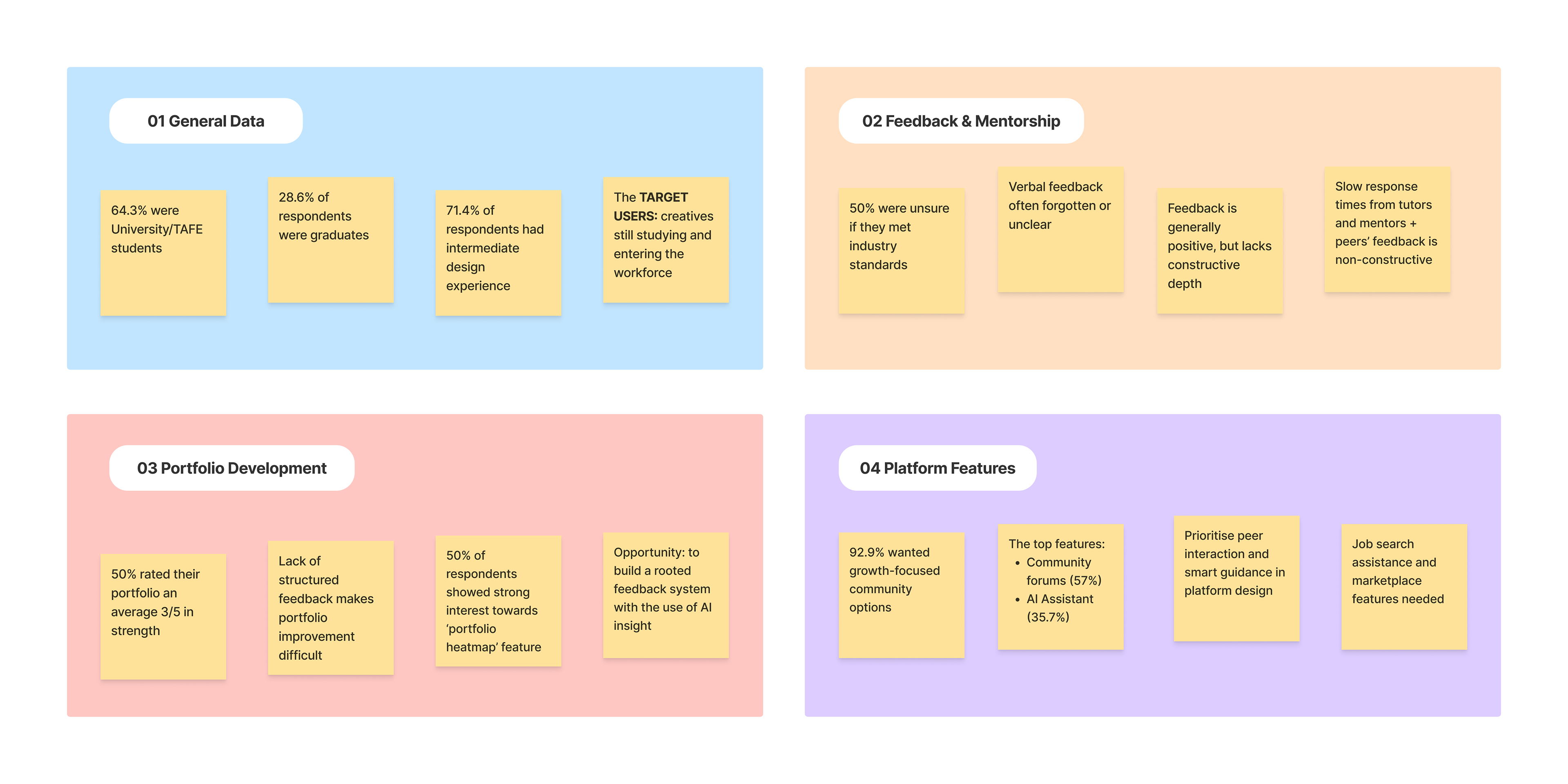
With 14 respondents, this 12-question survey was divided into four sections: General Information, Feedback & Mentorship, Portfolio Development, and Platform Features.
With 14 respondents, this 12-question survey was divided into four sections: General Information, Feedback & Mentorship, Portfolio Development, and Platform Features.
This questionnaire revealed that designers are seeking more actionable and timely feedback, rather than vague or delayed responses. It highlighted a strong demand for a platform that not only provides expert guidance but also fosters a collaborative community to support designers in refining their portfolios and skills.
Ideation
» It's now time to bring out the design board!
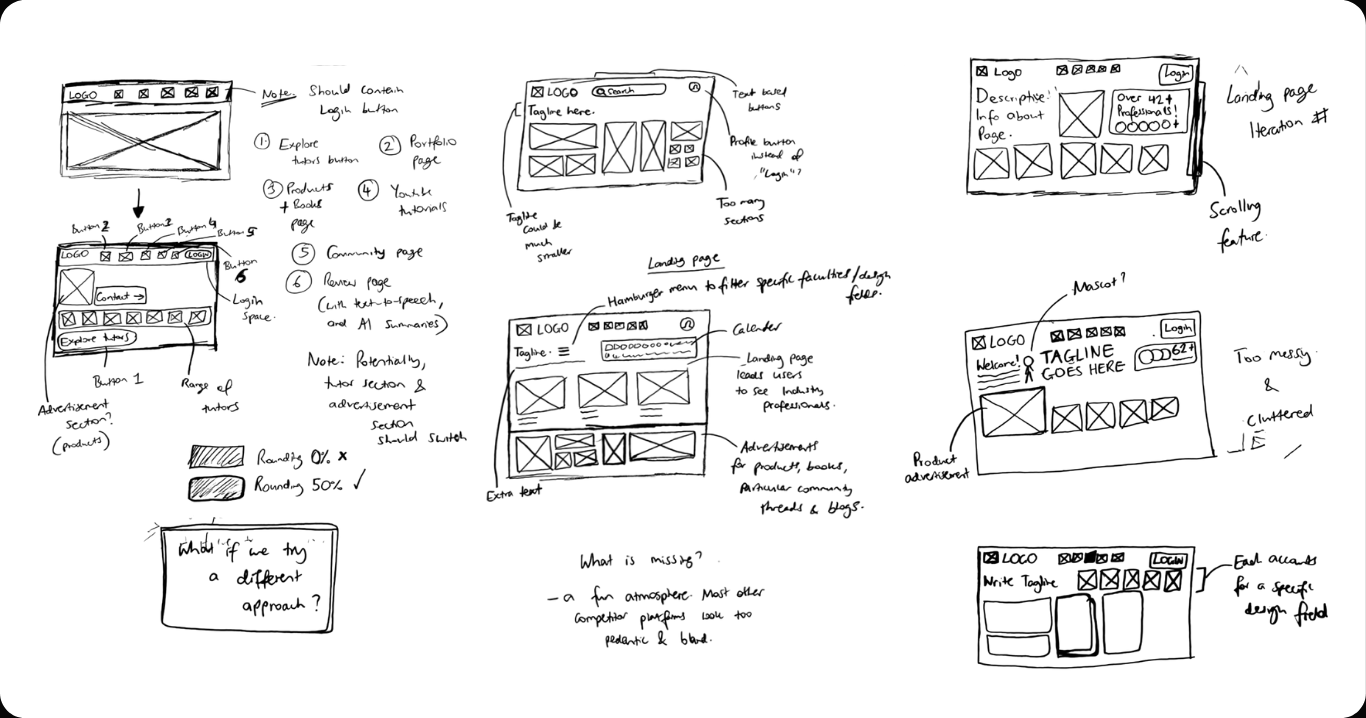
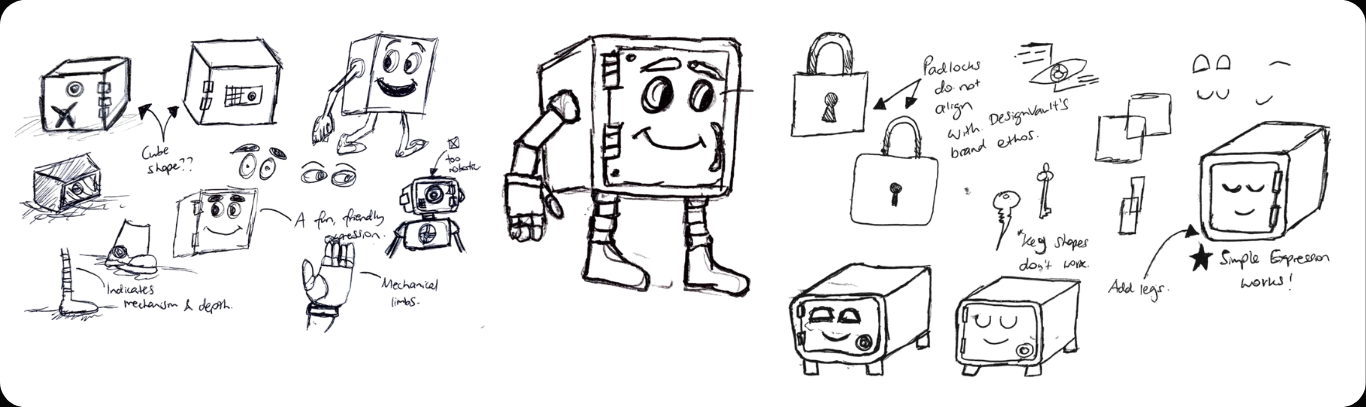
4 weeks after completing UX research, I created low-fidelity and brand persona sketches to quickly explore concepts. The low-fidelity sketches helped identify issues with clutter, hierarchy, and clarity, informing the shift to medium-fidelity prototypes.
The brand persona design iteration was an exciting process of balancing structure with approachability. After initial sketches inspired by a vault and feedback pointing to a cartoonish look, I refined the design with a vault shape, adding subtle details to keep it engaging yet aligned with DesignVault’s ethos.

[Mid-Fidelity Prototyping]
» Bringing ideas to life: transitioning from concept to wireframes
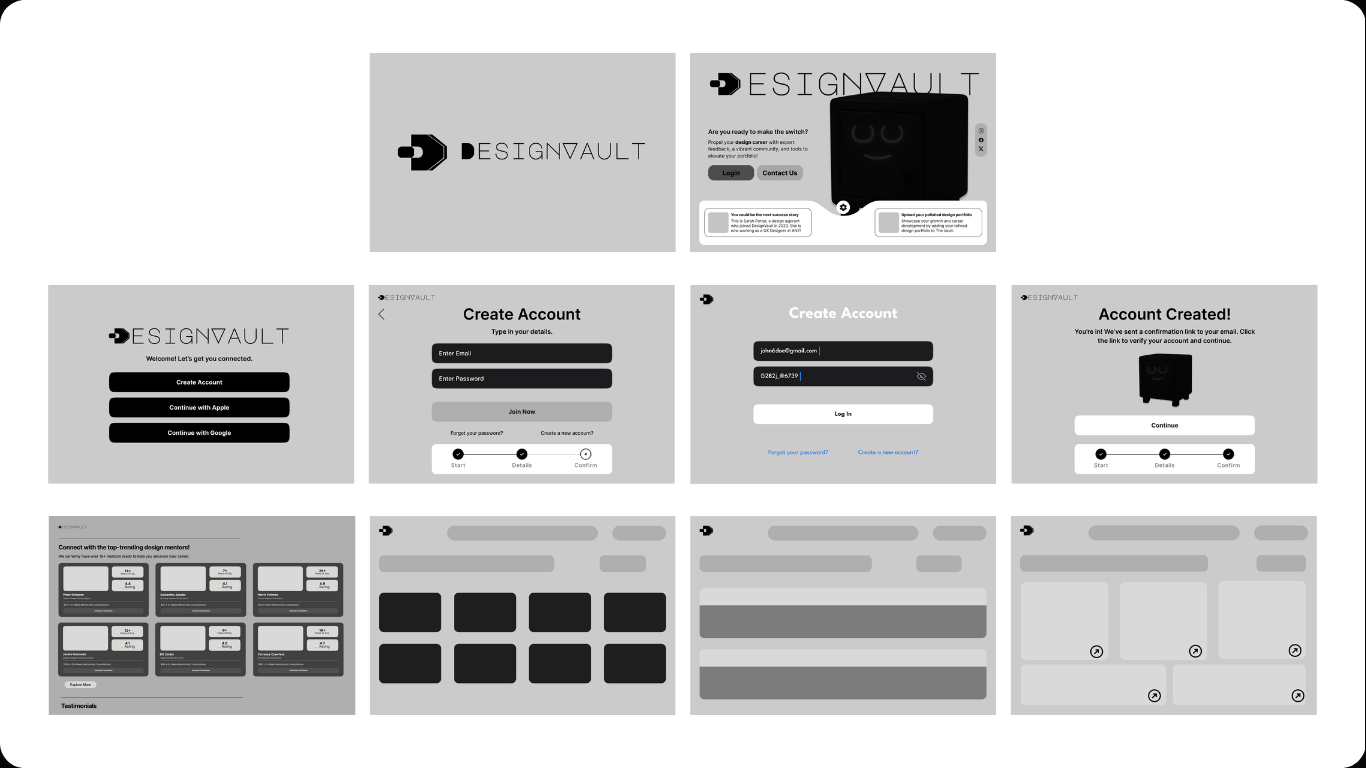
This exploratory medium-fidelity Figma design refined the narrative flow and core features, helping define the key elements needed for the final outcome.
Usability Testing
» Where did users struggle in the overall flow?
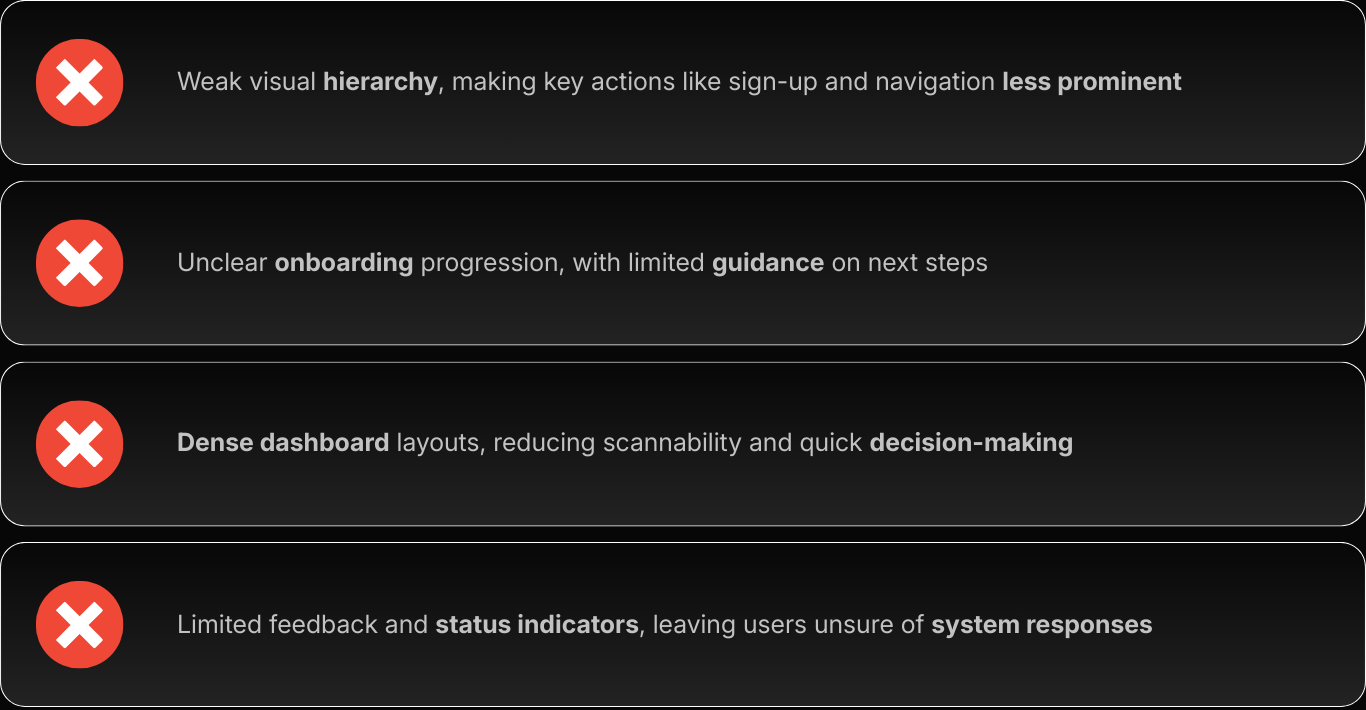
With only 2 weeks left before the submission deadline, I needed to resolve four key UX issues while finalizing documentation and preparing the project presentation.
With only 2 weeks left before the submission deadline, I needed to resolve four key UX issues while finalizing documentation and preparing the project presentation.
The Final Outcome
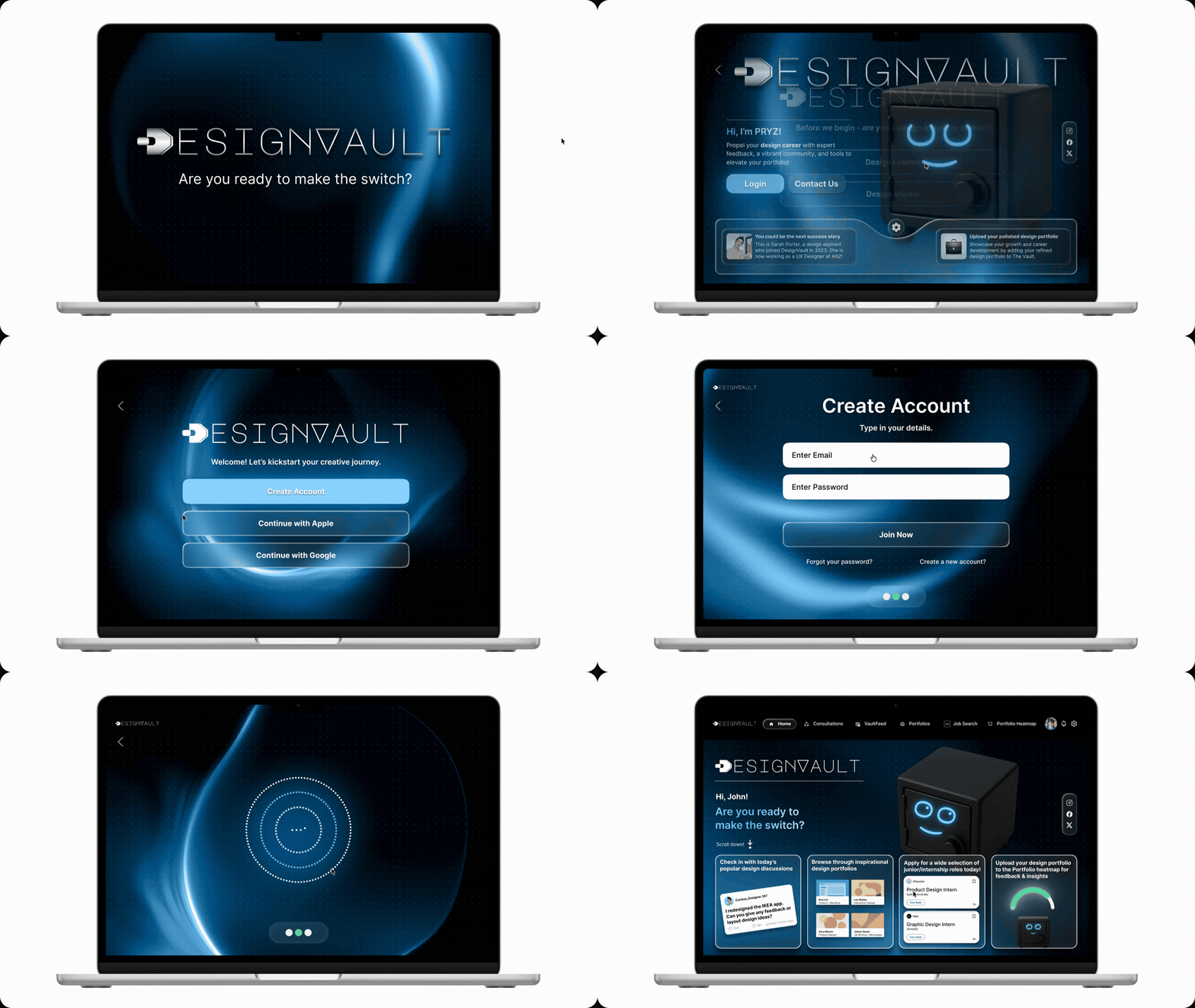
01 Frictionless Onboarding.
DesignVault's onboarding screen confirms successful account creation and reassures users with a clear next step. By combining friendly system feedback with a simple call to action, it sets a confident, welcoming tone and smoothly transitions users into the DesignVault experience!
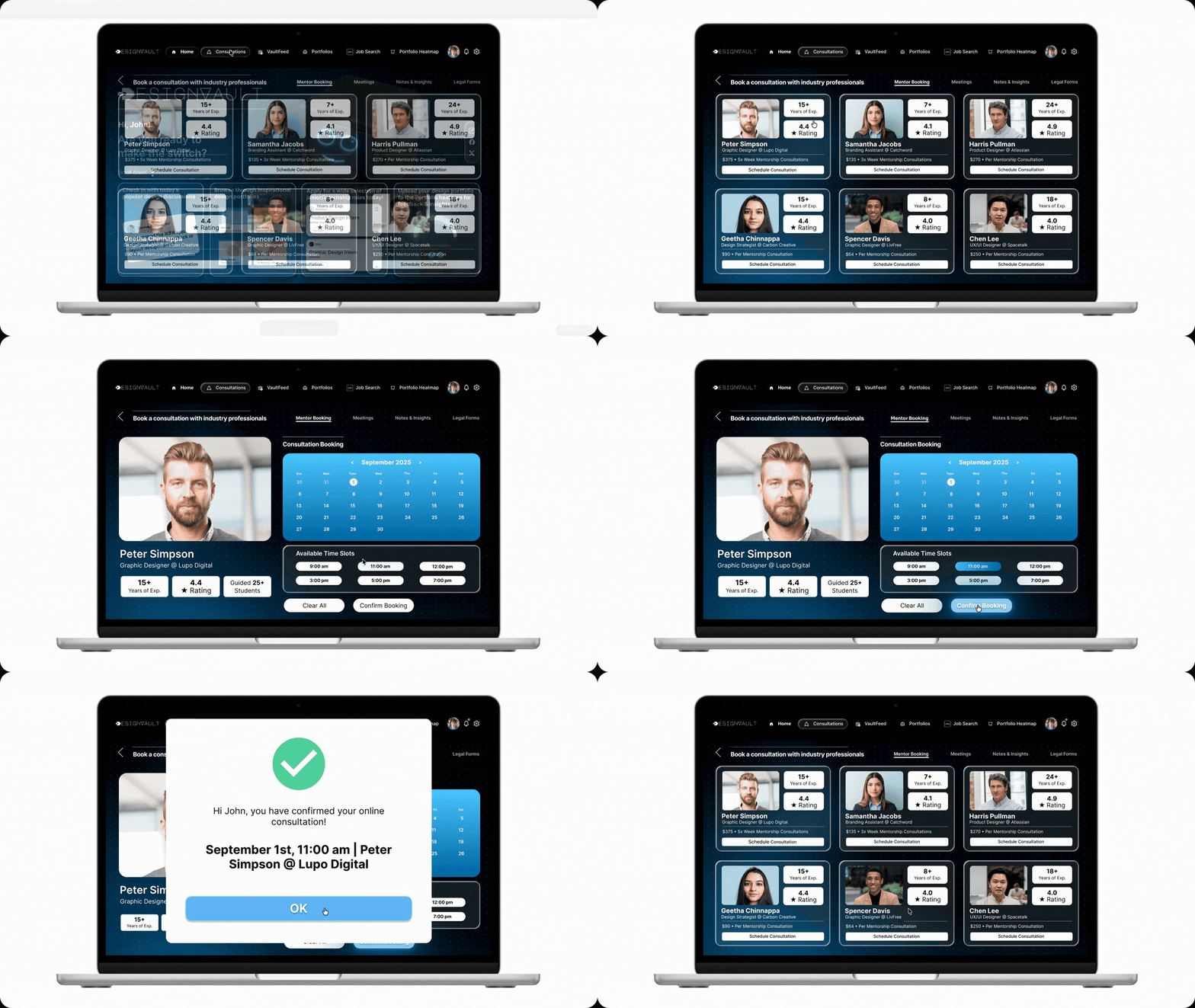
02 Effortless Consultation Booking.
The consultation booking page uses a clear, card-based layout to help emerging designers connect with a diverse range of industry professionals. Key details like experience, ratings, and pricing reduce uncertainty and support confident mentorship access.
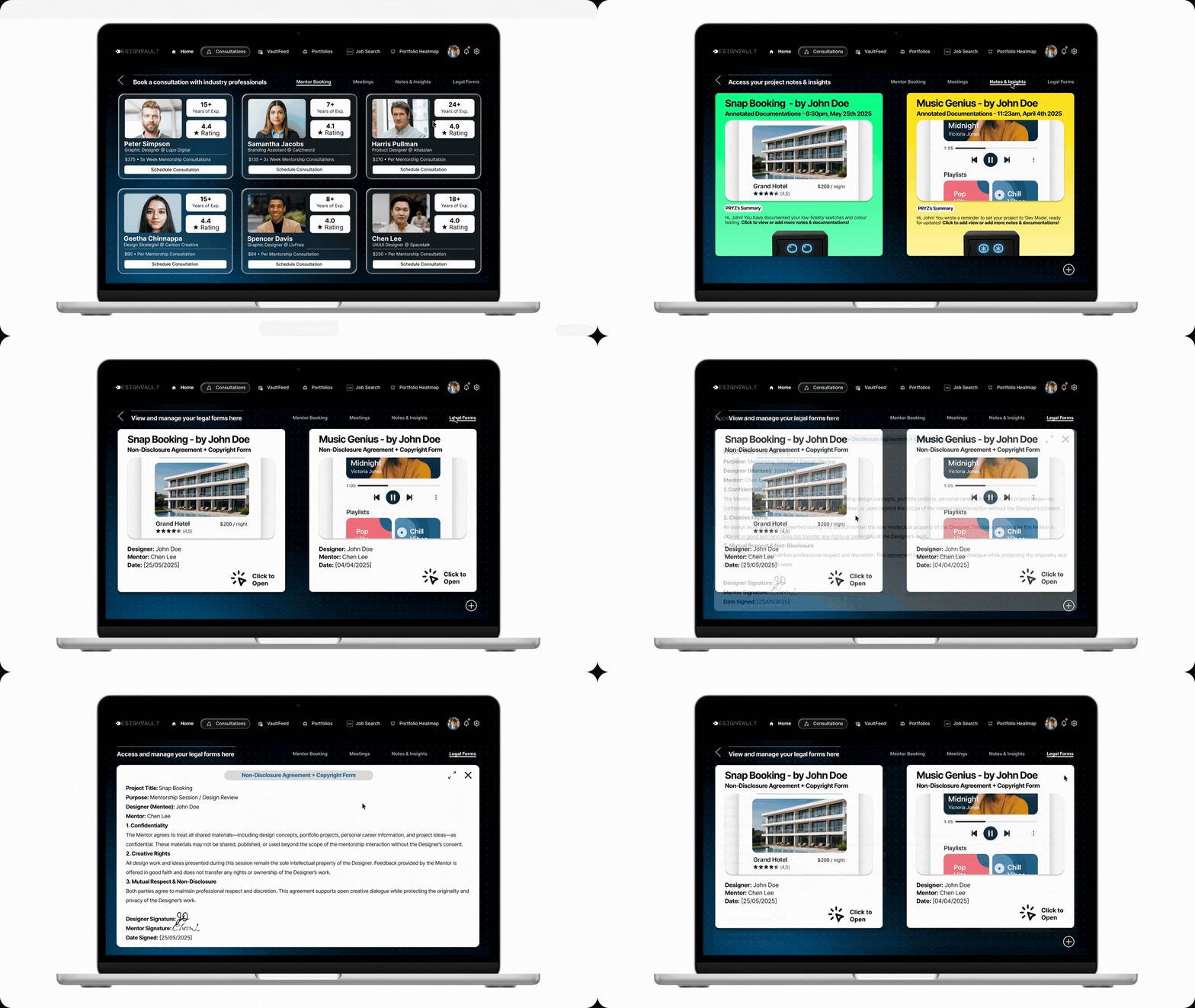
03 Centralised Notes, Insights & NDA Forms.
DesignVault extends beyond mentorship sessions by centralising project insights, annotated notes, and legal documentation in one place. Designers can review feedback, track progress, and securely manage NDAs, ensuring clarity, continuity, and trust throughout the collaboration process.
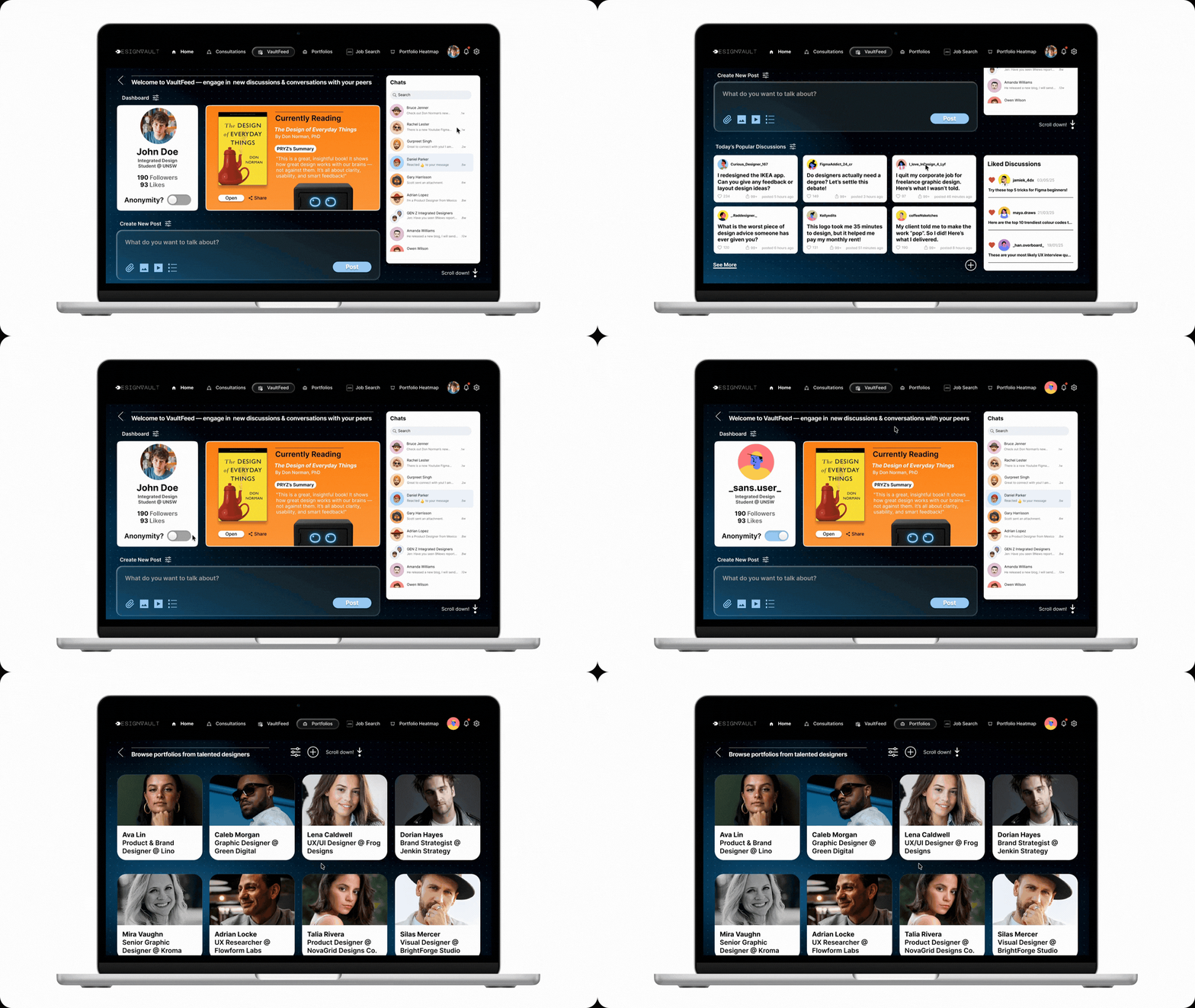
04 Community Engagement & Portfolio Curation.
This space combines community engagement and portfolio curation, enabling designers to connect, message peers, and participate anonymously if preferred. Alongside this, curated portfolios support inspiration, discovery, and a clearer understanding of industry-level work.
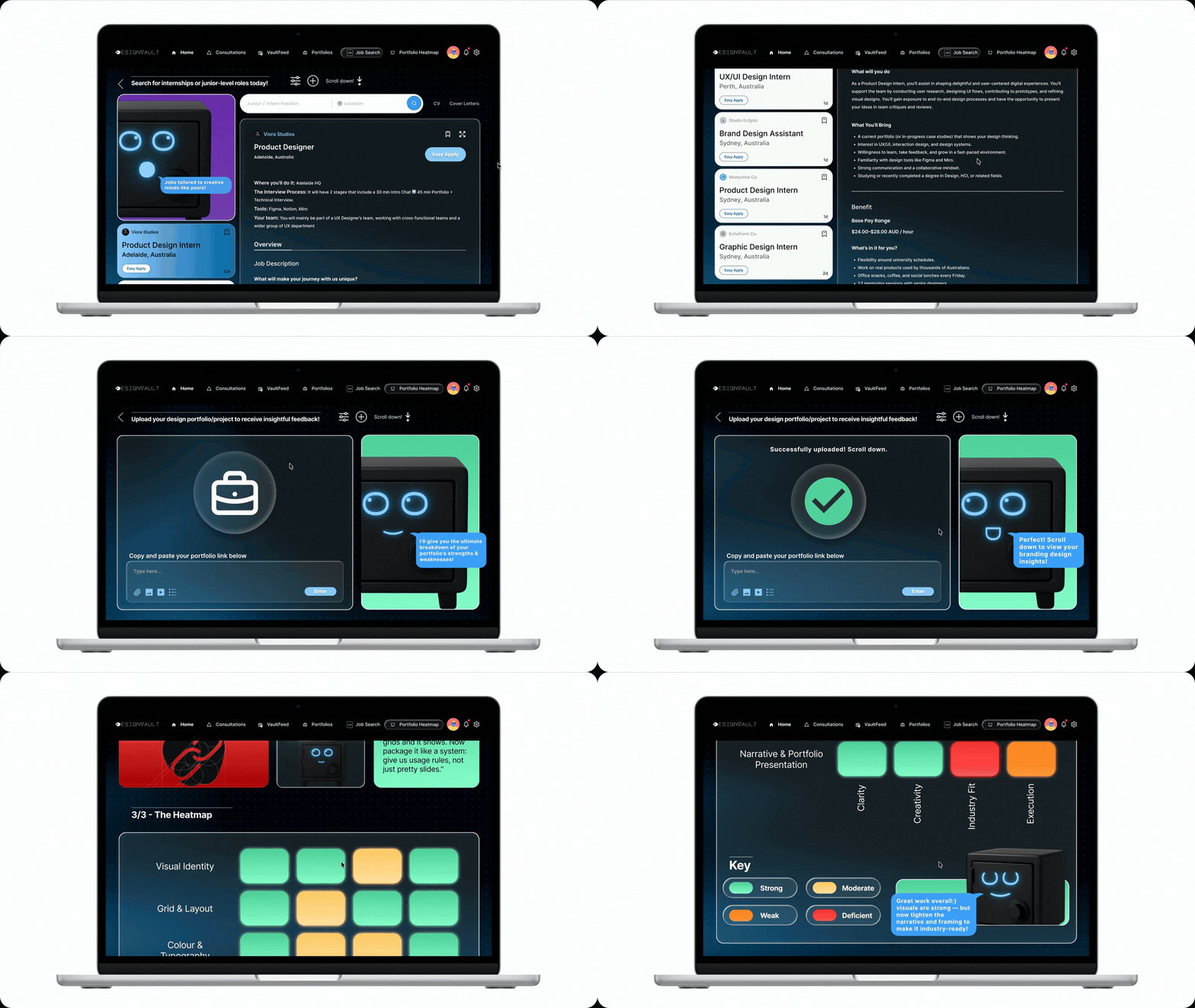
05 In-Built Job Search Tool & Portfolio Heatmap.
This feature supports career progression by combining internship and junior role discovery with actionable portfolio feedback. Curated job listings simplify the search process, while the portfolio heatmap provides clear, visual insights that help designers understand strengths, identify gaps, and refine their work with purpose.
Conclusion - A Blueprint for Emerging Designers
Awarded a High Distinction following extensive research and iterative design, DesignVault responds to the uncertainty emerging designers face when transitioning into industry. It bridges the gap between education and professional practice, giving designers the support, clarity, and confidence to shape their future.

[Retrospective]
Learnings & Key Takeaways
As my University of New South Wales graduation project, DesignVault marked my transition into the professional workforce. Presenting it through Gaddie and in-class pitches reinforced clear communication, adaptability, and industry awareness.
Peer and professional feedback validated the platform’s purpose while emphasizing the need to balance emerging technology, visual consistency, and flexibility, strengthening my ability to translate real-world constraints into industry-ready design decisions.